



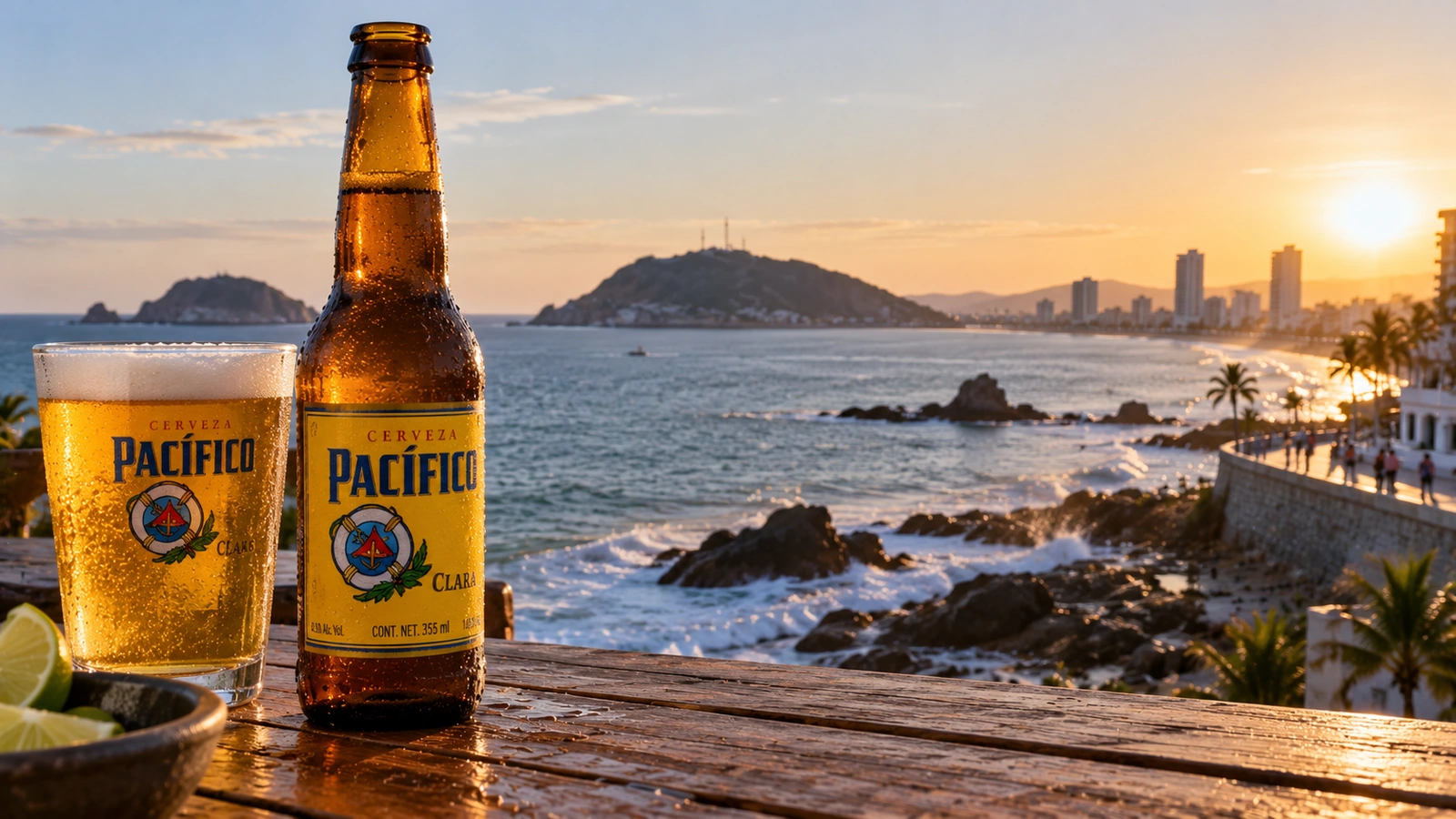
Long before becoming one of Mexico’s most recognizable beers both at home and abroad, Pacífico was a business venture designed to solve a far more local problem. In the late 19th century, Mazatlán depended on beer shipped in from elsewhere, and rising consumption created an opportunity to produce it directly in this port city in the state of Sinaloa.
That opportunity gave rise to Cervecería del Pacífico. Three German entrepreneurs—Germán Evers, Emilio Philippi, and Johan Georg Claussen, known in Mexico as Jorge Claussen—promoted the project alongside other investors. The brewery officially began operations on March 14, 1900, laying the foundation for an industrial activity that has remained tied to Mazatlán for more than a century.
The founders raised an investment of about 300,000 pesos at the time to purchase machinery from the United States. According to historical records from those early years, the new brewery had the capacity to produce about 175,000 liters of beer and 26,000 cases.
The environment favored the initiative. Mazatlán was already a major commercial port on Mexico’s Pacific coast and had a significant presence of foreign businesspeople and traders, including a German community that played an important role in various economic activities. Beer that had previously arrived through importers began to be produced locally.
A beer tied to its home region
A sense of place was present from the outset. The name Pacífico referred directly to the ocean that geographically defines Mazatlán and ultimately came to identify both the brewery and the beer produced at its facilities.
The company began by brewing a Pilsner-style beer that steadily gained acceptance among local consumers. An establishment was opened alongside the brewery to meet demand directly, while barrels and cases were distributed around the city on mule-drawn carts—a far cry from the scale the brand would later achieve.
Over time, its connection to Mazatlán became one of its core identity markers. The port, the ocean, and the coastal character continued to shape Pacífico’s evolution, even after it ceased to be primarily a regional beer and expanded distribution across Mexico and into other markets.
Growth also turned the brewery into one of northwestern Mexico’s important industrial centers. In 1926, management passed to Casa Melchers, a company with a long commercial history in Mexico and a significant presence among foreign businesspeople.
That period lasted for nearly three decades, until the corporate transaction in 1954 that would permanently reshape Pacífico’s future.
Joining Grupo Modelo
Grupo Modelo acquired Cervecería del Pacífico and its flagship brand in 1954. The transaction brought the Mazatlán company into a group that had been operating since 1925 and was gradually building one of Mexico’s largest brewing businesses.
The acquisition enabled Pacífico to steadily move beyond its status as a regional brand. Its distribution expanded across the country as Grupo Modelo developed a portfolio encompassing brands with different identities and origins.
Throughout that process, Pacífico retained an especially strong association with Mazatlán. The historic brewery remains in operation in the city, and Grupo Modelo officially identifies the facility as Compañía Cervecera del Pacífico.
International expansion later added another chapter to the brand’s history. In the United States, Pacífico developed a distinctive connection with surf culture in California and Baja California. The brand itself has made part of its story out of U.S. surfers traveling to Mexico, discovering the beer, and returning to California with cases of it, helping raise its profile north of the border.
Regardless of the promotional dimension that story later acquired, the association between Pacífico, Mexico’s coast, and a particular lifestyle helped build a distinct identity in the competitive U.S. market.
From a local brewery to AB InBev
The next major change came with AB InBev’s acquisition of Grupo Modelo. The deal was completed in 2013 and made the group’s Mexican brands part of the world’s largest brewing conglomerate.
Pacífico thus became part of a multinational company with a global presence and a portfolio that includes some of the world’s largest international beer brands. Within that structure, Grupo Modelo retains Mexican brands such as Corona Extra, Modelo Especial, Victoria, Negra Modelo, and Pacífico itself.
The scale of today’s business is difficult to compare with the brewery inaugurated in Mazatlán in 1900. Grupo Modelo currently operates eight breweries in Mexico and six plants dedicated to other parts of the production chain, including glass, malt, cans, and closures. The company puts its direct workforce in the country at nearly 30,000.
Pacífico continues to be brewed in Mazatlán, although production has also expanded to other facilities within the group. The brand has also added several varieties to its lineup and is sold in Mexico as well as international markets.
Its corporate history illustrates a common feature among some century-old brands that have survived successive waves of consolidation: ownership can change several times while geographic origin remains part of the brand’s core asset.
Pacífico was born because a group of entrepreneurs identified demand that imports could not adequately meet in early-20th-century Mazatlán. It later passed through Casa Melchers, joined Grupo Modelo in 1954, and became part of AB InBev more than a century after its founding. Yet its name, historic brewery, and much of its identity still point to the same place: the Mexican port on the Pacific Ocean where it first began production in 1900.








